
Show the systems already carrying the business, even if they are fragmented.
Request A Briefing
Start with the operating model, not a feature list.
Send the stack, the bottlenecks, the actors involved, and the first surface that matters. AIMXB will frame the operating model before proposing a sequence.
Be explicit about where coordination, visibility, or control is breaking down.
Name the first interface worth opening once the system is framed correctly.
Brief Constructor
A strong AIMXB brief shows the operating reality clearly enough for the system sequence to emerge.
Use these lenses as the shape of a serious briefing. The goal is to expose the pressure path, not to brainstorm features.
Current stack
Records
Portals
Billing
Reporting
Stack
Start by naming the systems already carrying the work.
AIMXB needs the current stack in view: records, portals, billing, reporting, workflows, communications, and any tools people rely on to keep the company moving.
Stack visible
before the redesign instinct kicks in
Briefing Lane
A serious request enters a governed lane, not a contact form void.
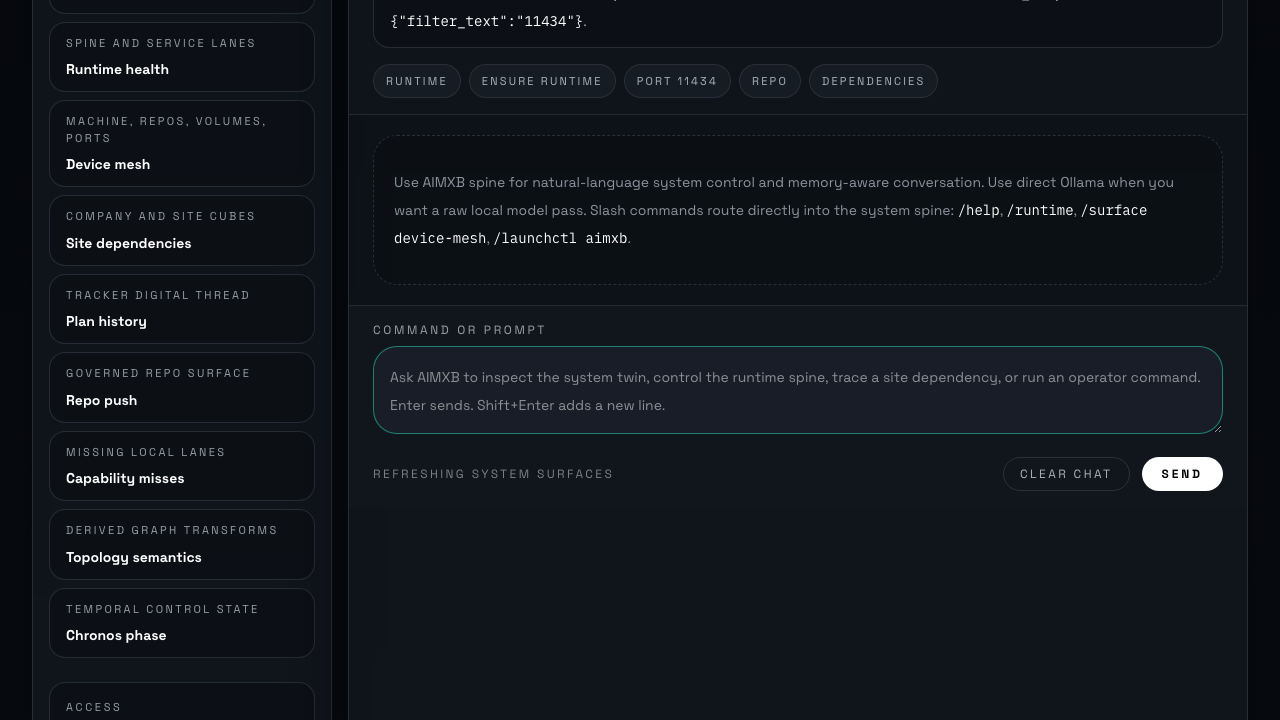
The AIMXB shell already treats operator prompts as routed requests with context, command entry, and a readable lane. A briefing should arrive with that same level of clarity.
Ingress
A good brief arrives as a clear operating request.
The best starting point is not a feature wishlist. It is a readable description of the stack, the actors, and the pressure path.
Model
The request gets translated into system shape.
AIMXB reads the brief into stack, actors, constraints, and first-surface options so the recommendation starts from reality.
Return
The output is a sequence, not vague advice.
The response should end with what opens first, what has to exist underneath it, and how the next moves compound from there.
AIMXB Response
A serious brief is read as a system problem first.
The goal is to understand the operating environment well enough that the build sequence becomes obvious.
01
AIMXB reads the tools, records, portals, and external systems already carrying the work.
The brief is first grounded in the current environment so the recommendation starts from reality instead of an imagined clean slate.
02
Then the business gets framed as objects, actors, state, and control points.
This step turns the request from a vague surface idea into a workable operating model that can support governance and execution.
03
The highest-pressure break is ranked before any release direction is set.
AIMXB looks for where continuity, visibility, and authority are actually failing so the first serious build relieves something real.
04
Only then does AIMXB set the first surface and the path that follows it.
The output is a practical build sequence: what should open first, what needs to exist underneath it, and what can compound after the first gain is secured.
Good Fit
AIMXB is for businesses with real operating complexity.
If the work requires shared state, decisions, governance, and deployable surfaces rather than isolated implementation, send the brief to victor@aimxb.com.